Houseplants in Low Light: Care Without Overcorrecting
Seasonal Care Practices
Winter changes the way light moves through a home.
Even in Los Angeles—where the days stay relatively mild and the sun still shows up—something shifts. The light comes in at a different angle. The days are shorter. The warmth is less consistent. Plants notice this long before we do.
I notice it every year when my houseplants start leaning toward the windows more insistently. My pothos stretches less. A few leaves yellow and let go. The monstera slows. The ZZ plant pauses, then quietly surprises me with a new shoot anyway.
Nothing looks dramatic. Nothing looks urgent.
And yet, this is usually the moment when people feel tempted to intervene.
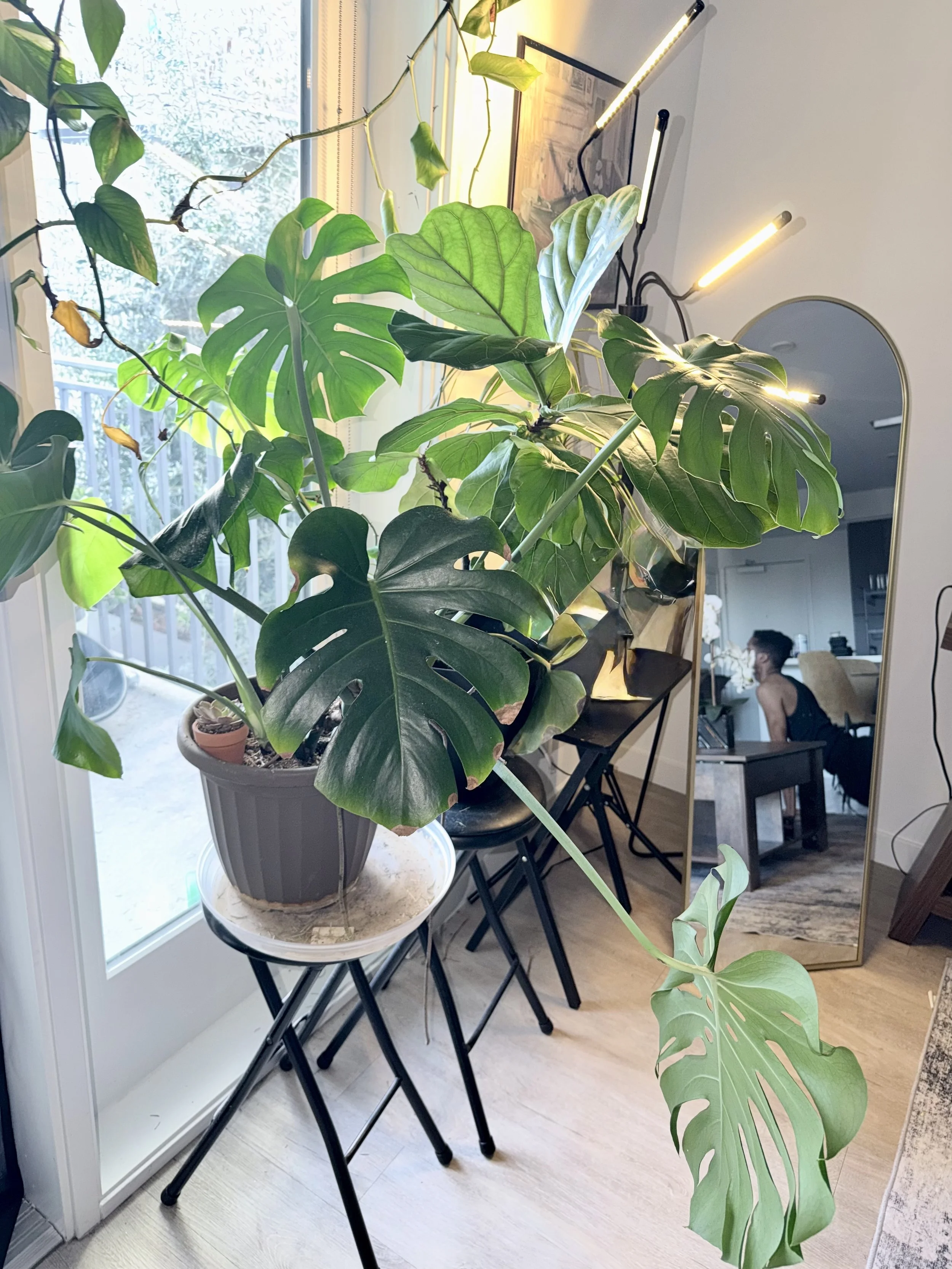
As light shifts throughout the day, plants subtly change how they hold themselves.
The Instinct to Fix What Isn’t Broken
When growth slows, our instinct is to compensate.We water more. We move plants from room to room chasing light. We add fertilizer. We assume something must be wrong because nothing appears to be happening.
But most houseplants struggle in low light not because they’re failing, but because we expect growth when the season is asking for maintenance.
Low light changes how plants operate. Photosynthesis slows. Water uptake decreases. Energy is conserved. Growth becomes selective rather than expansive.
From the outside, this can look like stagnation.
From the plant’s perspective, it’s adaptation.
What Care Looks Like in This Season
In winter, care often means restraint.
I still water my plants—but less aggressively, because reduced light means they aren’t using water at the same rate. I mist the ones that benefit from humidity, especially since we keep our home warm. I keep the soil lightly moist, not saturated. I let the plants orient themselves toward the windows without constantly repositioning them.
In other words, I support stability instead of forcing progress.
Most of my plants look unchanged right now. They’re alive, responsive, and steady. Only the fig keeps pushing out new growth, which surprises me every year and reminds me that even under the same conditions, living things respond differently.
There is no single correct winter behavior.
The Quiet Parallel
This is where the human lesson emerges—not loudly, but clearly.
In winter, many people assume that reduced energy or slower momentum means something is wrong. That we need to push harder, correct faster, or manufacture growth.
Plants tell a different story.
Slower seasons aren’t failures. They’re periods of maintenance—when the work is about preserving health, not accelerating output. Overcorrecting during these moments often creates more stress than support.
The same is true for people.
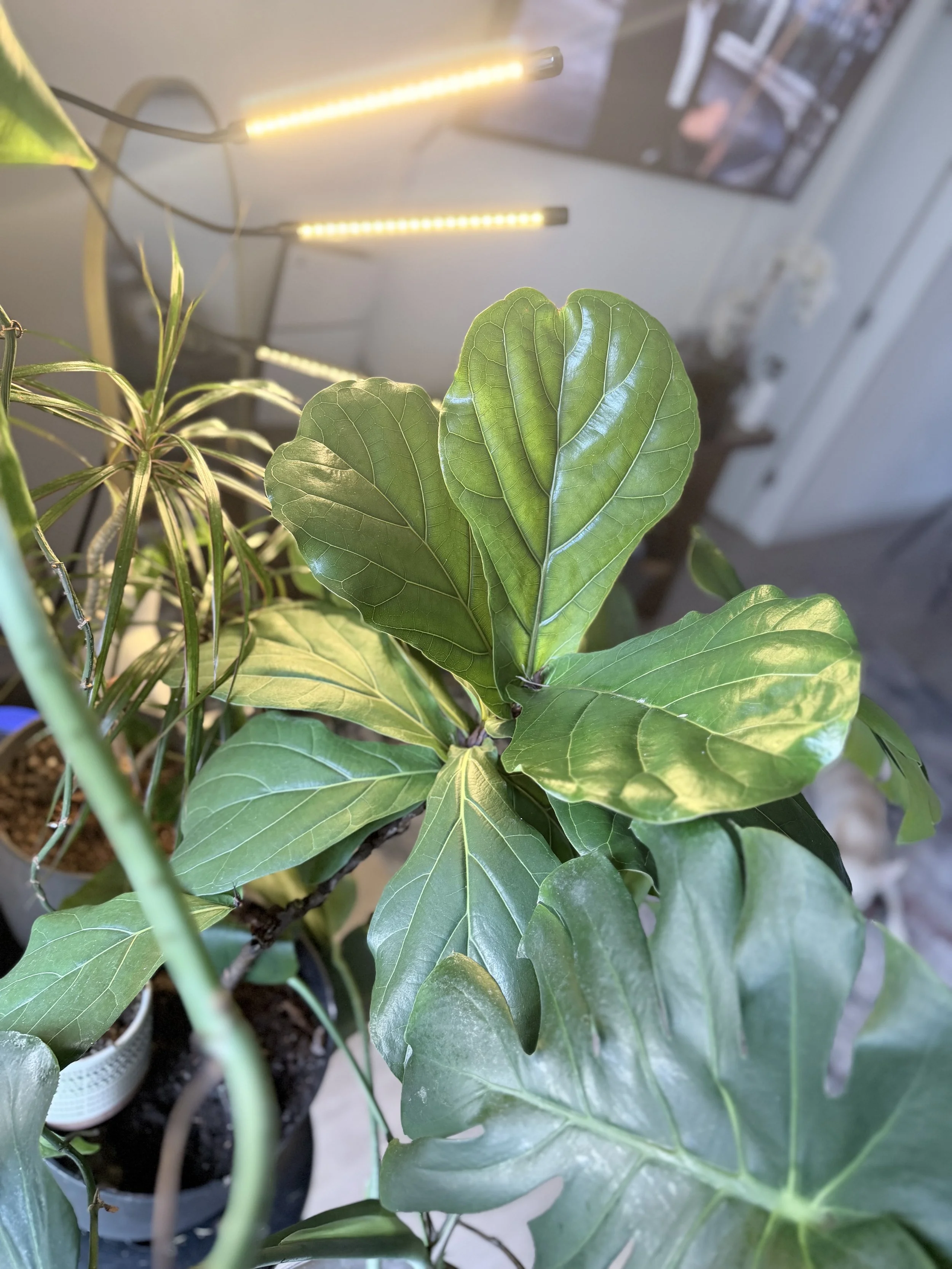
Winter growth is slower and more selective.
Letting Stillness Be Informative
Care without overcorrecting requires trust.
Trust that a lack of visible growth doesn’t mean decline. Trust that stability is doing its own kind of work. Trust that not everything needs intervention simply because it’s quiet.
Winter light teaches this gently, if we let it.
A Question to Sit With
As you look at your home—or your own energy—consider this:
What might benefit from maintenance instead of growth right now?
Not forever. Just for this season.